
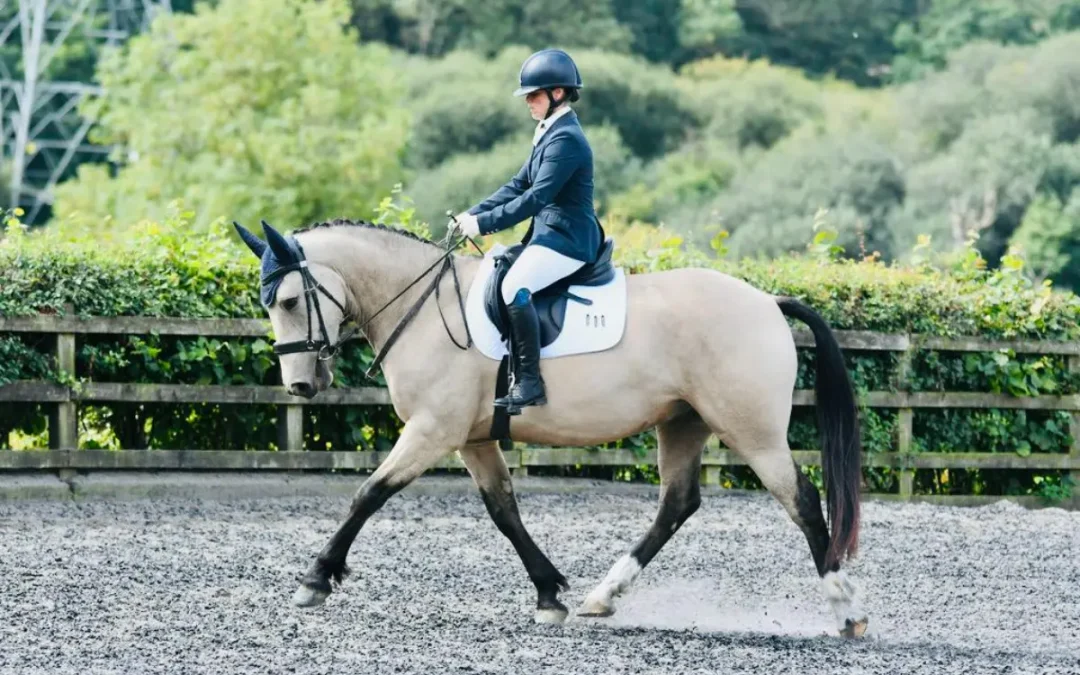
If you’re thinking about sending your horse to us for a boot camp, you’ve probably already Googled this question and got a wall of generic answers. “Structured routine.” “Professional environment.” “Tailored training plan.” None of it tells you what your horse will actually be doing on a Tuesday afternoon, or whether you’re going to feel like a stranger to your own horse by the time they come home.
So here’s the honest version, from someone who’s actually run these for years and watched horse after horse, and owner after owner, go through it.
Every Horse Comes In With a Plan
Before a horse even arrives, I’ve usually already met them, or at least had a proper conversation with the owner about what they actually want out of this. And that “what they want” varies enormously. Sometimes it’s behavioural: a horse who’s developed a habit nobody likes, on the ground or under saddle. Sometimes it’s nothing dramatic at all: general schooling, groundwork, getting fitter and stronger for the season ahead. Other times it’s specific, like hacking confidence, pole work, or canter work that’s never quite clicked.
I don’t have a fixed “boot camp programme” that every horse gets put through. That’s kind of the point. A horse who needs his confidence rebuilt after a bad experience is not getting the same week as a horse who just needs more canter fitness before a competition.
Day One (or Day Two)
Work usually starts the day the horse arrives, or the day after. I want to give them a minute to settle, but not so long that we lose momentum. That first session is mostly time. Time in the field, the yard, the stable, just being around the horse and seeing how they actually are, not how they were described to me.
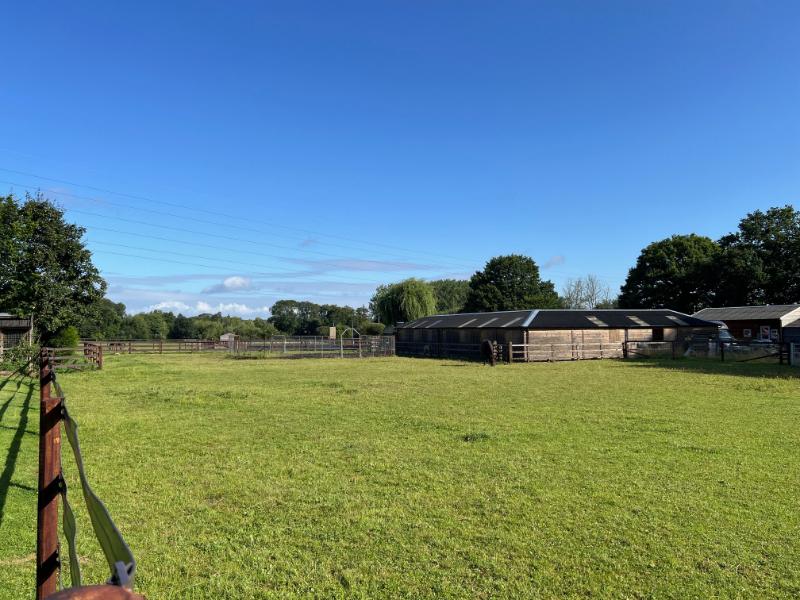


From there it moves into groundwork, which could mean handling, long-reining, lungeing, in-hand work, or going straight into ridden work, depending entirely on what that horse needs. A nervous four-year-old gets a very different first few days to a confident schoolmaster who’s just here to sharpen up before a show.
The Seasons Change the Routine
This bit surprises people, so it’s worth spelling out: the routine isn’t fixed year-round.
In summer, horses are generally out overnight and brought in during the day to work. In winter, that flips: they’re stabled overnight and turned out during the day. It’s about working with the weather, the grass, and what’s actually best for that horse at that time of year.
We can also cater to horses who need restricted turnout (laminitis, injury recovery, that sort of thing) because we’ve got an all-weather turnout pen for exactly that. And in summer we’re lucky enough to have really good grazing, so horses who do need ample grass get it.
What the Work Itself Looks Like
Day to day, the actual training is built around whatever that horse came in for. That might be:
- Groundwork: handling, lungeing, long-reining, in-hand pole work, desensitisation
- Ridden schooling, building strength and fitness gradually
- Hacking, particularly for horses who struggle with napping, fear of open spaces, or confidence after something like a road traffic incident
- Pole work or jump prep
- Competition outings, if that’s part of the plan
Throughout all of it, owners are kept up to date. That’s not a nice-to-have, it’s important. The horse isn’t disappearing into a black box for a few weeks and reappearing transformed. You’ll know what’s happening.
A Horse I’ll Always Remember
A few years ago a lady brought me a lovely, newly backed four-year-old gelding. She was getting back into horses after a break, that gap where life happens and you lose a bit of confidence without even realising it.
He came in for light schooling, some general education, and to build his confidence hacking, with a couple of competitions pencilled in. His canter came on so much during his time with us. But honestly, the bit I remember most isn’t the canter, it’s getting his owner over to ride him in the arena, out hacking, and at an arena hire, and watching her confidence on him grow alongside his own.
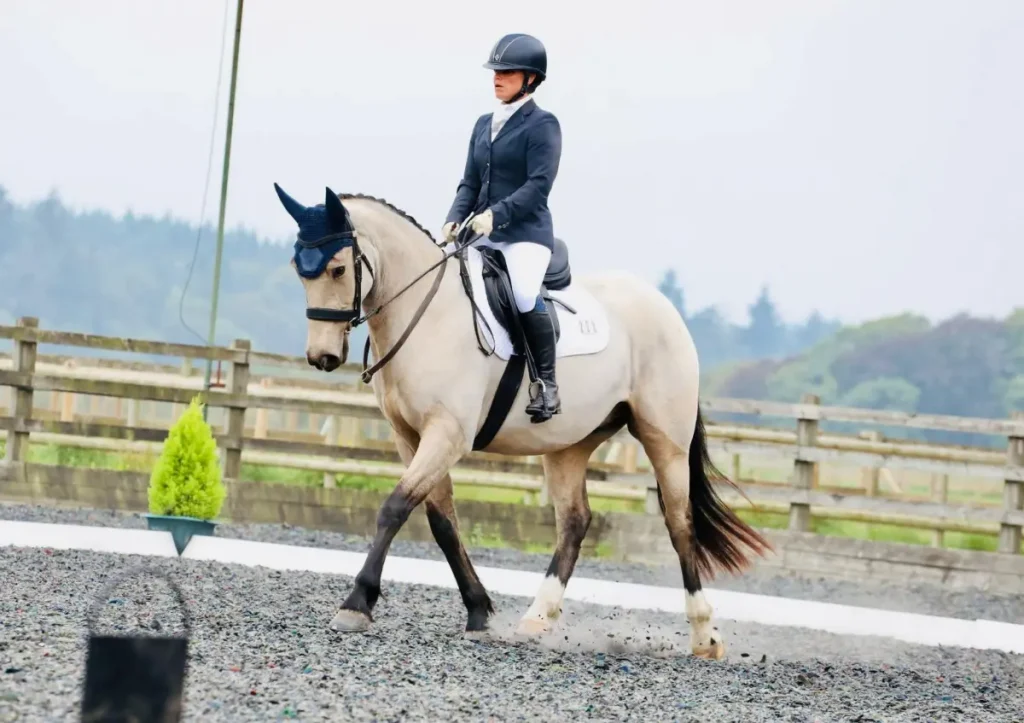
When he went home, I kept going over twice a week to support them both, and that partnership just went from strength to strength. Being even a small part of that journey is honestly one of my favourite things about this job.
The Thing Owners Need to Hear (Even If They Don’t Want To)
Here’s my honest opinion, and it’s one I’ll repeat to every single owner: you have to make the time to be involved.
It’s tempting to drop your horse off, disappear for a few weeks, and collect a “finished” horse at the end. I understand the appeal. But that’s not how this works, and it’s not how it should work. Owners need to come and watch, ride, and be part of the process before the horse goes home. This is a learning journey for everyone, not just the horse.
A horse can learn something completely new in three weeks with me. But if the owner hasn’t been part of that, hasn’t ridden through it, hasn’t built the same understanding alongside the horse, that progress can unravel fast once they’re back home together. The horse isn’t the only one who needs the education.
How a Horse Boot Camp Actually Ends
Before any horse goes home, the owner needs to get on and ride (or do the groundwork, whatever the horse came in for); that’s non-negotiable. We do proper handover sessions at the yard so you’re not just handed a lead rope and a wave goodbye.
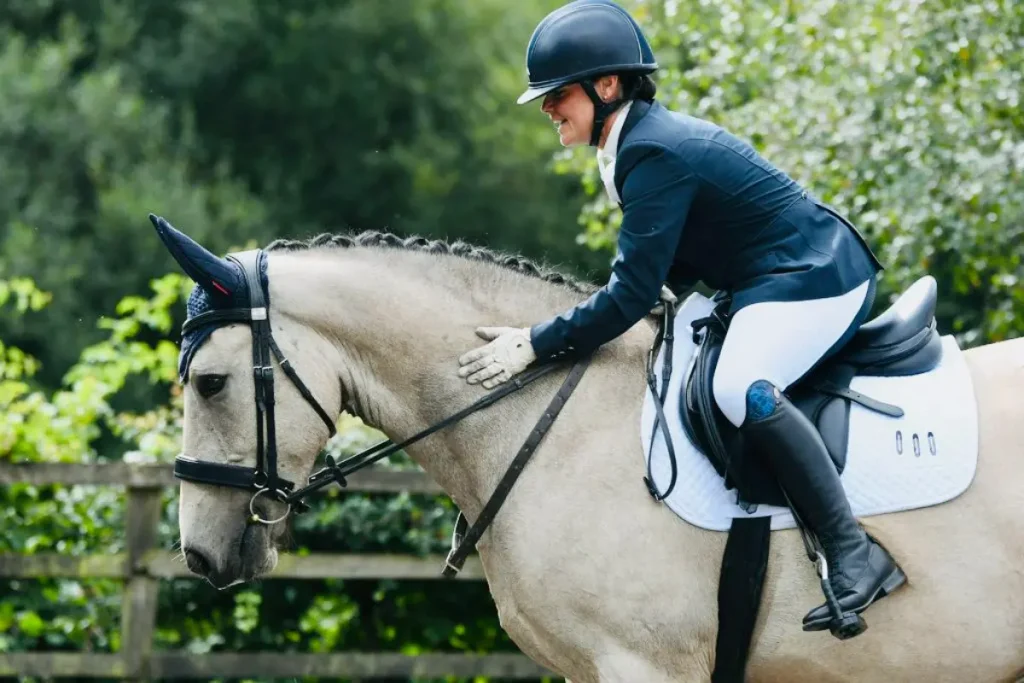
After that, I’m always available for one-off or regular follow-up sessions at your yard if you’re local enough, and support is always there on the phone if you’re not. That’s exactly what happened with the gelding and his owner: the boot camp wasn’t the end of the story, it was the start of it.
How Long Does It Actually Take?
This genuinely varies too much to give you a single number, every horse, every goal, every starting point is different. But realistically, most horses stay with us for a minimum of two to four weeks. Some need longer. It takes as long as it takes, and I’d rather be honest about that than promise you a tidy two-week turnaround that doesn’t actually serve the horse.
If You’re Considering It
If you’re weighing up whether a boot camp is right for your horse, the best place to start is a conversation, about what you’re hoping to get out of it, and what your horse actually needs rather than what a generic programme might offer. Get in touch and we can talk it through properly.